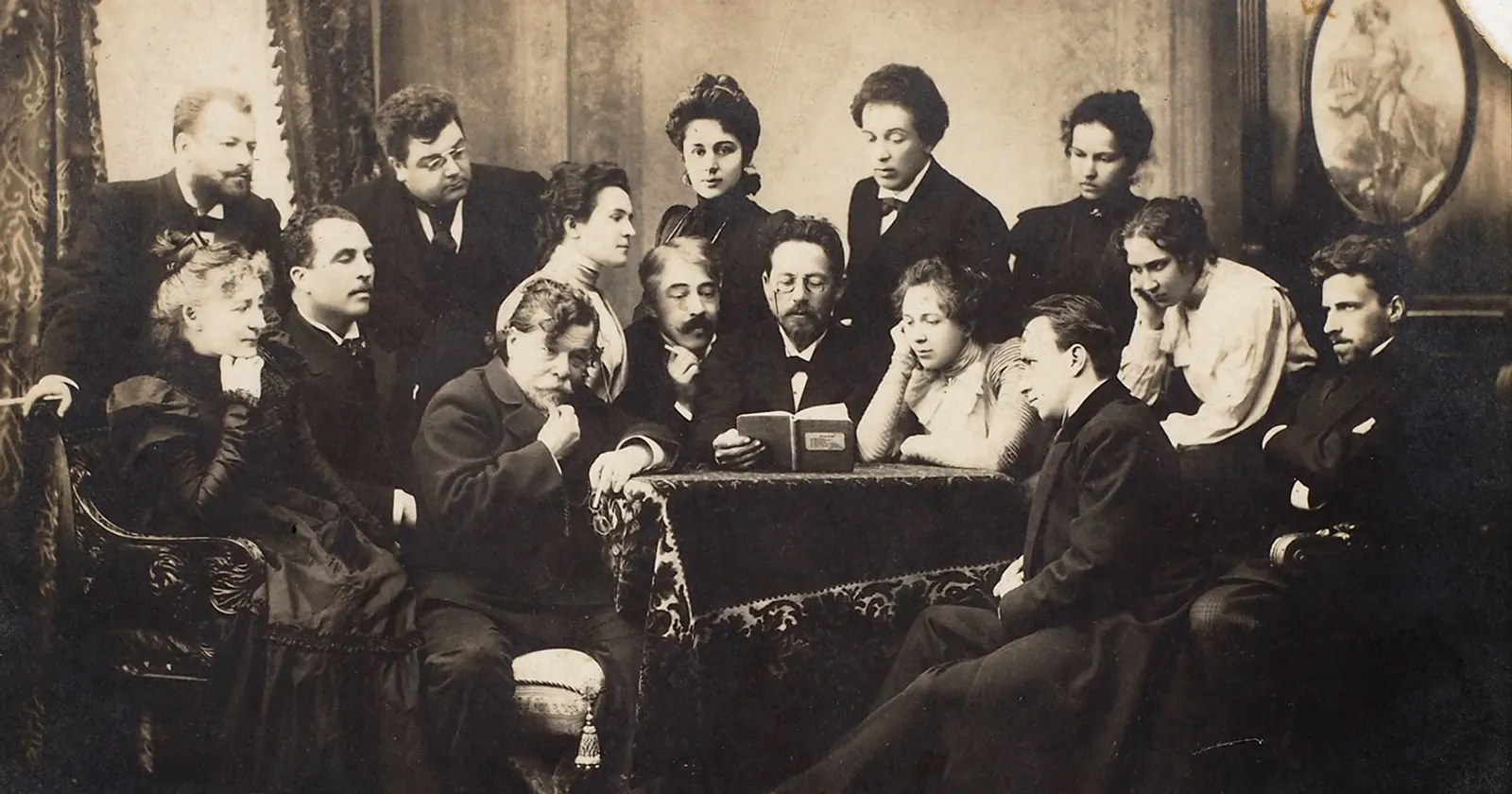
Acting techniques and methods: a map of the major approaches
Stanislavski, the Method, Strasberg, Adler, Meisner, Michael Chekhov, Brecht, Lecoq: what each approach actually proposes, where it comes from, where they part ways.
Acting has a vocabulary, schools and a century of disagreements. Knowing them does not tell you how to act, but it helps you hear what a note is asking for and choose where to enter a role.
This topic gathers the major approaches to acting, from Stanislavski to the American Method, from Michael Chekhov to Brecht and Lecoq, and the concrete work they left behind: reading a scene’s circumstances, breaking it down, finding what a character wants, preparing a monologue, adjusting between stage and camera. It describes what each school offers, without crowning any of them.
1 article 2 terms updated October 6, 2026
Stanislavski, the Method, Strasberg, Adler, Meisner, Michael Chekhov, Brecht, Lecoq: what each approach actually proposes, where it comes from, where they part ways.
None wins outright. They all aim at truthful, repeatable acting and part ways on the starting point: memory, imagination, the partner or the body. Most working actors combine several approaches, often without naming them.
Rarely, in a real career. You train with one teacher, then another, and the vocabularies stack up across classes and parts. Knowing the names mostly helps you understand what a director’s note is asking for.
With the given circumstances: who, where, when, what has just happened. Then comes dividing the scene into beats and, for each one, asking what the character wants. Those three moves turn up in almost every school.
Follow what we publish: @join_acto on Instagram.