
In short
Stanislavski's "system" is a set of tools for analysis and rehearsal whose starting point shifted during its author's lifetime, from emotion memory towards physical action. The American Method mostly kept the early period, the one Stanislavski himself had moved beyond.
- A system, not a method: working tools for rehearsal, given circumstances, the "magic if", units, objectives.
- Two Stanislavskis: emotion memory around 1910, physical action in the 1930s.
- The American Method: a reading of the early period, which its source had already outgrown.
- What survives: a vocabulary used everywhere, and the question "what would I do in these circumstances?".
The Stanislavski method is probably the most quoted and least read approach in acting. People sum it up in one sentence, relive the character's emotion, and that sentence mostly describes what its author spent the end of his life correcting.
Who was Stanislavski?
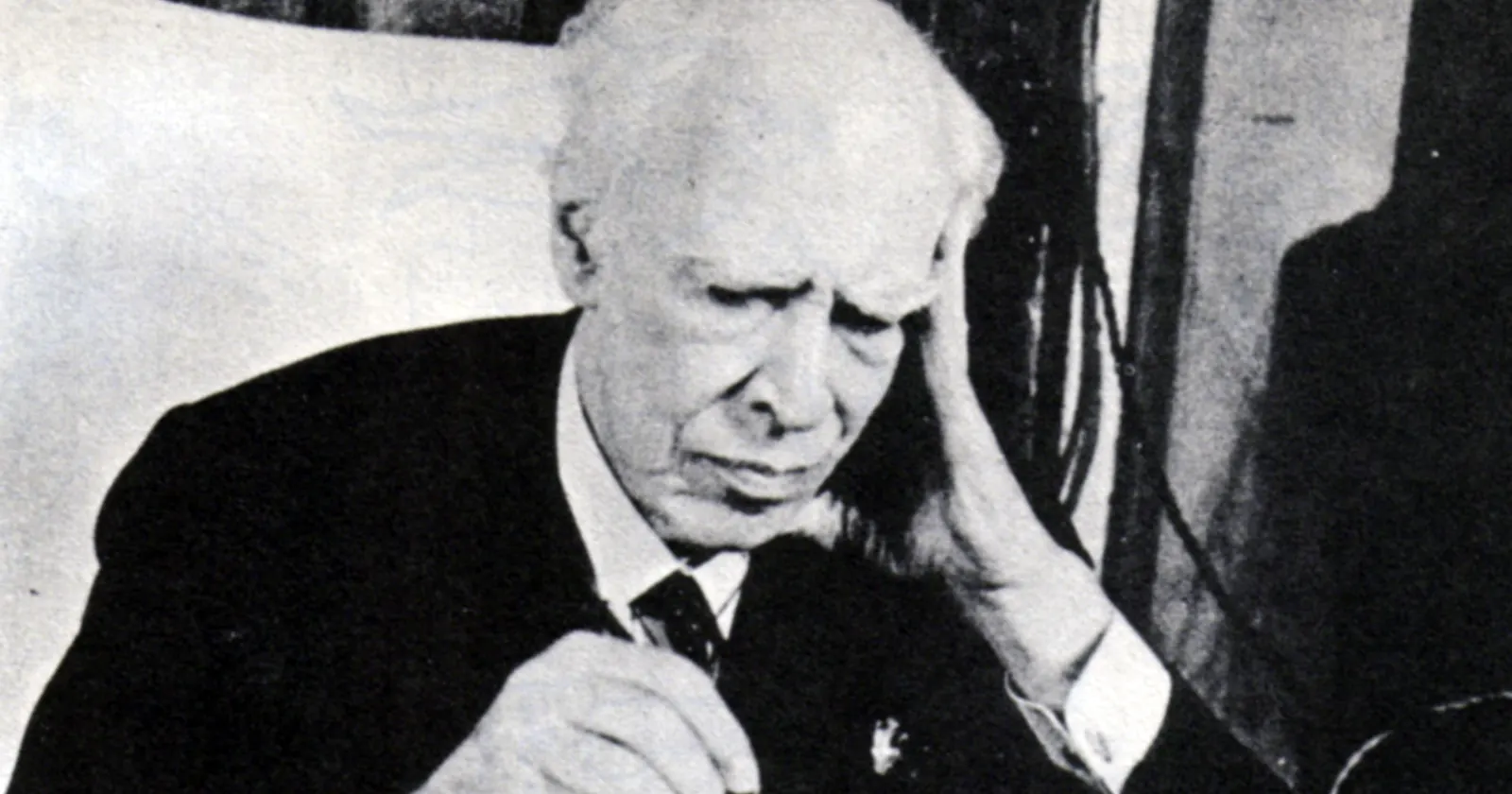
Konstantin Stanislavski (1863-1938) was a Russian actor and director, co-founder of the Moscow Art Theatre, which opened in 1898 after a famous eighteen-hour conversation with Vladimir Nemirovich-Danchenko in a Moscow restaurant. That is where he staged Chekhov's major plays, and where, over nearly forty years, he built his "system", the first attempt to organise the actor's work methodically.1
The word matters. Stanislavski spoke of a system, not a method. "The Method", with a capital M, refers to the American reworking that came after him, and the two do not overlap.2
His best-known book in English, An Actor Prepares, appeared in 1936 in Elizabeth Hapgood's abridged translation, while he was still alive and still revising. That condensed volume did a great deal to fix the image of a system centred on the inner life, at a time when the work itself was heading elsewhere. The fuller Russian text came out in 1938, and an unabridged English edition, Jean Benedetti's An Actor's Work, only arrived in 2008.1
What does the system contain?
The system is a set of tools for analysis and rehearsal, not a doctrine about emotion. Its best-known parts: the given circumstances, everything the text establishes around the character; the "magic if"; dividing the scene into units; and objectives, what the character is trying to get.5
The "magic if" puts the system's working question into words: what would the person playing do if they found themselves in these circumstances? The question starts from the play and the situation, not from the actor's private life.4
Units and objectives, for their part, have become the everyday language of scene analysis, even in classes that never mention Stanislavski. One objective per unit, a super-objective running through the whole play: the framework has passed into the ordinary speech of the profession.6
Why do people talk about two Stanislavskis?
Because the system changed its starting point during its author's lifetime. The early Stanislavski, around the 1910s, leaned on emotion memory, an idea he adapted from the French psychologist Théodule Ribot: recall a feeling you have already lived, and put it at the service of the role.1
The late Stanislavski, working with the Opera-Dramatic Studio from 1935 until his death, had largely left that road for the method of physical actions and what he called active analysis: start from what the character concretely does, and let emotion arrive through the action instead of summoning it head-on. The finding behind that shift is still repeated in studios: you cannot order an emotion directly, but you can order an action.7
This was not a recantation but a continuous movement. According to his assistants, a few months before his death he was still saying that the work could start from the inside or from the outside. The system quoted as a doctrine was, on its author's side, an open investigation to the very end. Scholars such as Jean Benedetti and Sharon Carnicke have traced that trajectory in detail, and it is the single most useful fact for reading anything labelled "Stanislavskian": the label can point to either end of the journey.
Is the American Method the Stanislavski method?
No, and the disagreement is on record. The Method was born at the Group Theatre in the 1930s, then carried on at the Actors Studio from 1947, where Lee Strasberg developed affective memory: drawing on your own memories to create the emotion of the role. It is the early Stanislavski, extended and hardened.2
Stella Adler, who worked with Stanislavski in Paris in the summer of 1934, came back with a clear disagreement: he himself no longer started from there, and he treated emotion memory as a last resort. Her teaching, built on imagination and circumstances, and Sanford Meisner's, built on listening to the partner, are two other readings of the same inheritance.3
Calling the use of personal memories "the Stanislavski method" therefore credits the master with something one of his heirs systematised, and that he himself had moved past.
What survives of the system today?
Its vocabulary, first of all: objective, stakes, given circumstances, subtext, beat, used every day in rehearsal rooms that no longer connect them to anyone. And its opening question, what would I do in these circumstances, which remains the most common way into a scene, whatever the school.6 It is also a question you can ask with nobody else around, script in hand, in the routine every actor builds between two projects.
There is also its quietest legacy: having treated acting as work that can be organised, with tools that are passed on and argued over. The schools that followed, including those that set out to contradict it, inherited that, Brecht and the distancing effect included. You can reject the system, and still find yourself arguing in its terms.
To place the system among the approaches that grew out of it or set themselves against it, from Strasberg to Michael Chekhov and from Brecht to Lecoq, our article on acting techniques and methods draws the full map.
Sources
- Stanislavski's system, Wikipedia, accessed September 2026
- Méthode (théâtre), Wikipédia, accessed September 2026 (in French)
- De la Méthode : origines et conséquences, Études théâtrales, 2006 (in French)
- Méthode Stanislavski : principes, exercices, limites, Cours Les Insurgés (in French)
- Stanislavsky system, Encyclopaedia Britannica
- The Stanislavsky Technique: An Actor's Guide, Backstage
- Stanislavsky method, EBSCO Research Starters
Frequently asked questions
Did Stanislavski ask actors to relive their own emotions?
Early in his research, around 1910, he relied on emotion memory, inspired by the psychologist Théodule Ribot. By the 1930s he had largely left that road for the method of physical actions, which lets emotion arrive through what the character does. The image of a Stanislavski centred on the actor's personal experience only fits his first period.
What is the "magic if"?
It is the system's working question: what would the person playing do if they found themselves in the character's circumstances? It starts from the play and the situation, not from the actor's private life. You ask it scene by scene, from what the text establishes.
Which Stanislavski book should you read first?
An Actor Prepares is still the best known in English, but it is a 1936 abridged translation that freezes the early phase of the system. Jean Benedetti's unabridged translation, An Actor's Work, published in 2008, gives the complete text. Reading both periods keeps you from taking one stage for the whole.
Read next
Follow what we publish: @join_acto on Instagram.