In short
Learning fast means compressing into a few hours the repetitions memory would happily spread over several days: the text comes out right that evening, then fades quickly. The fast techniques that hold up are the oldest in the profession, and research validated them after the fact.
- The feeling of mastery is misleading: a text you have just reread feels known because you have just reread it.
- Fast in, fast out: without reactivation, retention drops steeply in the first hours.
- Reciting with the page covered consolidates more than rereading, for the same time spent.
- Even over three days, spacing pays: a few short passes separated by nights of sleep shift the forgetting curve.
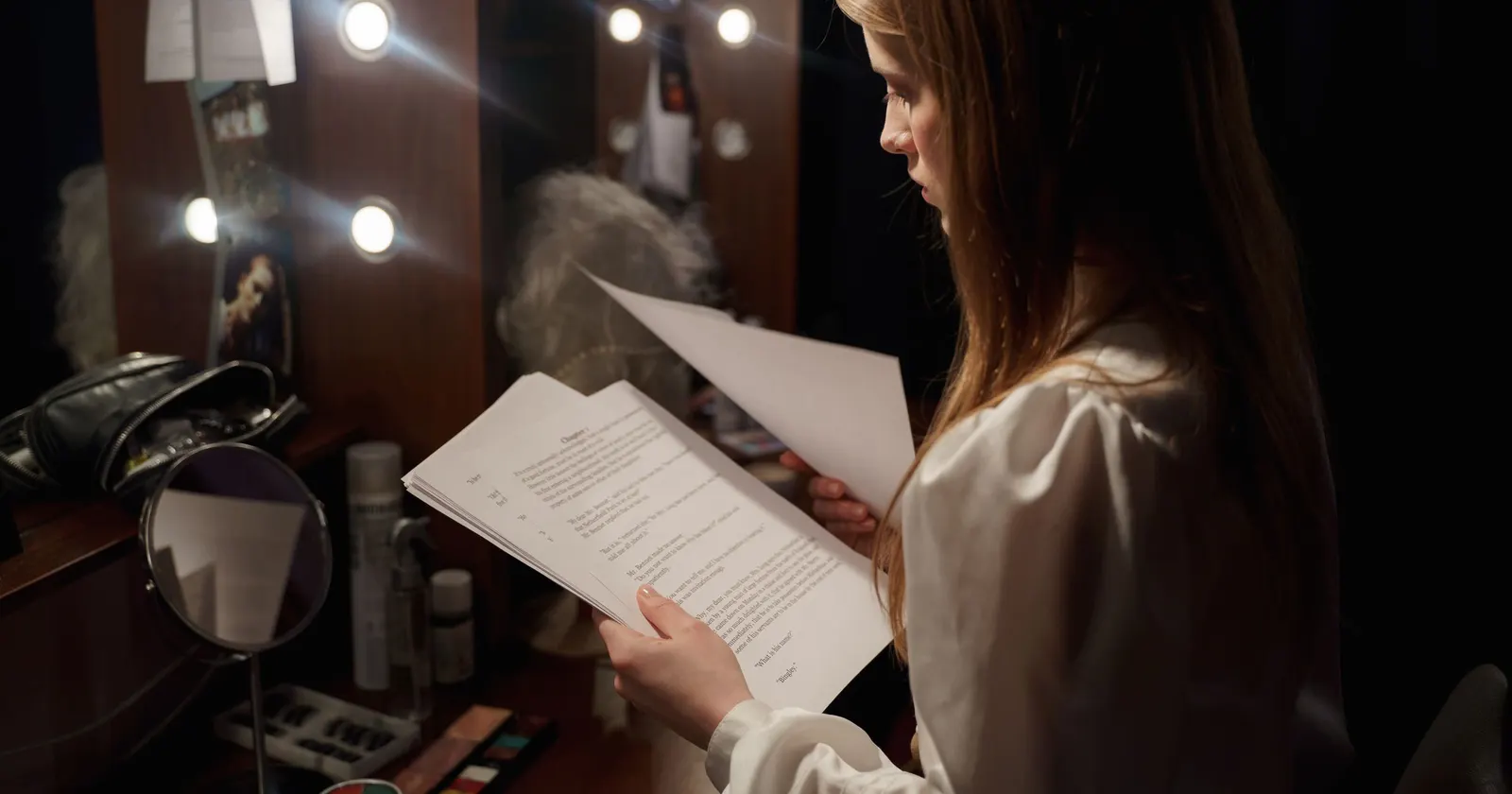
The sides arrive on Monday evening, the scene shoots on Thursday. It is an ordinary situation in the profession, and it rests on a fact research has described precisely for a hundred and forty years: speed of learning and length of retention do not go together. Understanding what express memorization actually does, and what it does not, changes how you read every method that promises to go fast.
What actually happens during express memorization?
Learning fast means compressing into a few hours the repetitions memory would happily process over several days. The text settles through close-packed repetition and gives an immediate sense of mastery. That sense is well documented: it measures what is available right now, not what will hold over time.
Psychologists call this massed practice. It works, in the sense that the text comes out correctly at the end of the session. The trap lies elsewhere: a text you have just seen feels known precisely because you have just seen it. The fluency of the last read-through gets mistaken for the solidity of what has been learned, and studies of judgments of learning show the confusion is universal, among students and working actors alike. The next morning gives the real measure.
What does speed cost once the lines are learned?
Fast in, fast out. Hermann Ebbinghaus measured it as early as 1885: without reactivation, retention drops steeply in the first hours, then the slope flattens.1 A text learned in one block is still there the next day, much less so the following week, unless something reactivates it in between.
The synthesis by Cepeda and colleagues, published in 2006, pools more than two hundred and fifty experiments on verbal memory and confirms the finding at scale: for the same working time, practice spread over several sessions retains better than a single sitting.2 A text learned in a hurry is a loan, not an asset. For a scene shot on Thursday and forgotten on Friday, the loan is plenty. For a part that has to hold through six weeks of performances, the sums change, and it explains a familiar situation: an actor word-perfect on Friday evening who finds holes in the text on Monday. Lines learned the night before an audition come with their own constraints, covered in preparing an audition in 24 hours.
Why are the documented fast techniques the oldest in the profession?
The methods recent guides present as shortcuts, reading aloud, writing the part out by hand, walking while saying it, covering the page and reciting it, show up in rehearsal practice long before experimental psychology. Research validated them after the fact, under other names.
The covered page is what the literature calls retrieval practice: Roediger and Karpicke showed in 2006 that pulling a text out of memory consolidates it more than rereading it, for the same time spent.3 The Italian run, that seated speed-through with no acting, is its collective version. Walking echoes the observations of Helga and Tony Noice on professional actors, for whom lines tied to a movement held better, and longer, than lines learned sitting still.4 As for reading aloud, it benefits from a measured production effect: what the mouth has spoken stands out better than what the eye has only skimmed.
The same work by the Noices adds an observation that sheds light on all the rest: the actors they interviewed almost never memorize word for word.4 Their reading looks for why the character chooses these words at this moment, and the lines attach themselves to that chain of intentions. That is where real speed comes from: a text that is understood offers handholds, a text that is scanned offers none.
How does the profession reconcile urgency and retention?
What working actors do combines two moves: retrieving rather than rereading, and splitting the available time rather than spending it in one block. Even over three days, a few spaced passes, separated by nights of sleep, follow the logic research has described since Ebbinghaus.
Retrieving does not mean reciting your part alone in a corner. Dries almost always land on a cue pickup, the handover where the other character's line triggers yours. Recording your partner's lines and answering the playback, as you would to learn lines without a scene partner, works those handovers from the very first evening.
Sleep plays a documented role in consolidation: two sessions separated by a night weigh more than the same sessions run back to back. Three days' notice leaves room for five or six short reactivations, and that spread is enough to shift the curve. The groundwork behind these habits, and how they fit together over the life of a part, is laid out in our pillar article on how actors learn lines by heart.
Express memorization exists, the profession practises it every week, and research knows its exact price: what speed gives, time takes back, unless the text is reactivated. Actors who learn fast are simply reaching earlier for moves the profession has always known.
Sources
- Hermann Ebbinghaus, Über das Gedächtnis, 1885. Forgetting curve
- N. Cepeda et al., Distributed Practice in Verbal Recall Tasks: A Review and Quantitative Synthesis, Psychological Bulletin, 2006
- Henry L. Roediger and Jeffrey D. Karpicke, Test-Enhanced Learning, Psychological Science, 2006. Testing yourself beats rereading
- How Actors Remember Their Lines, Psychology Today, 2012. On the work of Helga and Tony Noice
Frequently asked questions
Can you learn lines in one night?
Yes, for the next day. An evening of close-packed repetition is enough for the text to come out right in the morning, provided you sleep: the night consolidates what was worked in the evening. The same text, with no further pass, will have lost a great deal a week later.
Why do lines known the night before have gaps the next day?
Because the fluency of the last read-through gets mistaken for solid learning. A text you have just read feels known, and forgetting starts within the first hours. Reciting with the page covered before bed gives a more honest measure than one last reread.
Should you learn word for word when time is short?
The actors studied by Helga and Tony Noice almost never do. They first work out why the character says these words at this moment, and the text attaches itself to that sequence of intentions. The detour through meaning saves time: a text that is understood gives memory something to hold on to.
Read next
Follow what we publish: @join_acto on Instagram.