In short
Twenty-four hours before an audition, the question is not how to find more time but what to cut. Three things never get cut, because they cost a few minutes and leaving them out cancels everything else.
- Read the brief: format, slate, how to send, how to name the file. A submission that ignores the instructions is set aside before anyone watches it.
- Secure the sound before the frame, before the light, before the acting. Picking a room without echo takes a minute.
- Sleep: a text learned in the evening consolidates overnight. Three hours of work and a real night's sleep beat four hours taken out of it.
- What gets cut first: technical ambition, and background research on the project.
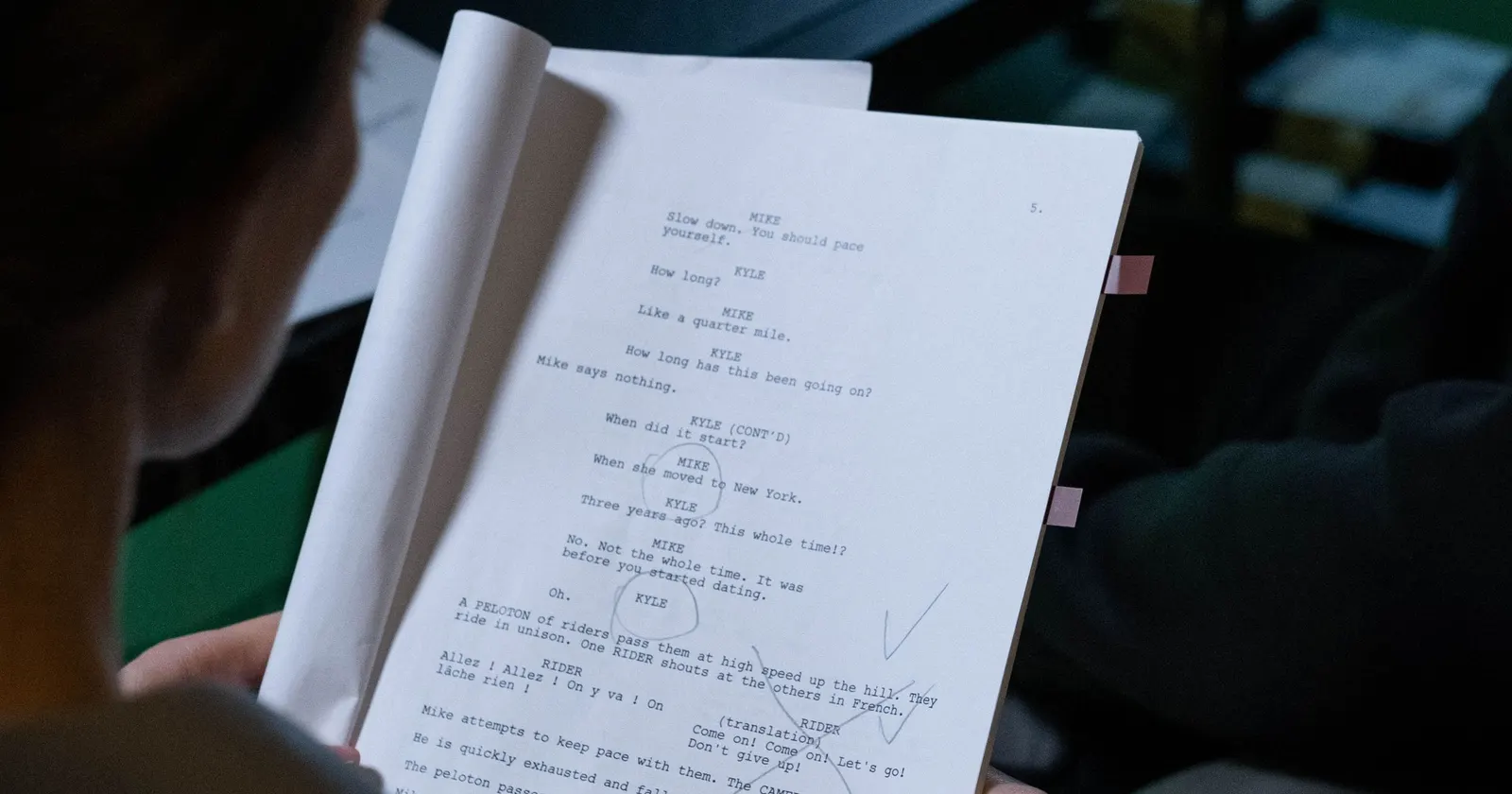
Twenty-four hours is the usual notice. Sometimes less. The scene arrives in the evening for the next morning, and the profession has worked this way for a long time.
So the question is not how to give yourself more time. It is what to cut when there is none.
What never gets cut?
Three things come up in every professional source, and what they have in common is that they cost very little time. That is exactly what makes them the priority when there is none: dropping them frees almost nothing, while their absence can cancel all the rest of the work.
Read the brief. The format requested, the slate if one is required, how to send, how to name the file. Several guides point out that casting directors set aside a submission that did not follow the instructions, before even watching it.1 That is five minutes that cancel everything else if they get skipped.
Secure the sound. One guide proposes an explicit order of priority: sound before frame, before light, before acting.2 Not because acting matters least, but because it cannot be seen if the rest is bad. Choosing a room without echo takes a minute.
Sleep. This is the most counter-intuitive point and the best documented one. A freshly learned text consolidates during sleep: what was worked on in the evening keeps being processed overnight, provided there is a night.4 Three hours of work followed by real sleep are often worth more than four hours taken out of it.
What gets cut first?
Technical ambition gets cut first. The perfect background, the second light source, the microphone you have not bought yet: all of that is optimisation, not threshold. The difference between a decent setup and an excellent one is barely visible, while the difference between decent and bad shows immediately.
A window is enough. A plain wall is enough. A room with curtains is enough. The most technical guides describe complete setups, but they describe an ideal, not a minimum.3 What actually holds across all the guides is something we looked at closely in how to make a self-tape audition.
Background research on the world of the project also gets cut. It is real work, but it rarely produces a visible effect on three minutes of scene, and it eats the hours that will be missing elsewhere.
What is left when the text is not quite learned?
A scene prepared in one night is rarely at the same level of command as a scene worked on for three weeks. The question, in the morning, is not how to reach perfection but how to know precisely where the fragile spots are, and which ones are likely to give way the moment attention goes elsewhere.
They are not spread at random. The beginning almost always holds. The end often does. The middle is the zone that gives way, all the more so when the text is long. What falls first are the interchangeable words: the connectives, the phrasings the actor would have put differently, the passages where two lines look alike. That is exactly what a cloze test lets you check in a few minutes, the night before.
On what professionals do in those cases, opinions converge fairly widely: an approximation in the words is noticed far less than acting that is absent because all the attention was busy retrieving the exact text. Keeping the pages in hand until the last moment is also common practice, and one that most casting directors accept without difficulty.
Why is urgency part of the job?
It would be easy to conclude that these deadlines are bad and should be longer. That is probably true, and it changes nothing. No opinion piece has ever extended a casting deadline, and the profession has long organised itself around this constraint rather than against it.
Productions decide late, roles free up late, castings open late. An actor who refused short notice would refuse most opportunities.
What can be worked on, then, is not the scene in twenty-four hours. It is the ability to know what to do with twenty-four hours. And that ability is acquired exactly like everything else: by practising it outside of any emergency, in the periods when nothing is pressing.
Sources
- Comment réussir à coup sûr sa self-tape, YourCasting, February 2026
- 7 erreurs à éviter pour ta self-tape, PAT Studio
- Self-tape acteur : définition, matériel, conseils, Cours Les Insurgés
- Université Paris Cité and Observatoire B2V des Mémoires, on memory consolidation during sleep
Frequently asked questions
Do you need to know the lines by heart for an audition the next day?
As far as you can, without sacrificing the night. An approximation in the words is noticed far less than acting that is absent because all the attention is hunting for the exact text. Keeping the pages in hand until the last moment is common practice, and most casting directors accept it.
Is it better to work late or to sleep?
Sleep. A freshly learned text consolidates during sleep: what was worked on in the evening keeps being processed overnight. Three hours of work followed by a real night's sleep are often worth more than four hours taken out of it.
What equipment do you need for a self-tape prepared in one night?
Nothing to buy. A window, a plain wall, a room without echo and the phone you already have. Sound comes before the frame, the frame before the light. Everything else is optimisation, not threshold.
Read next
Follow what we publish: @join_acto on Instagram.